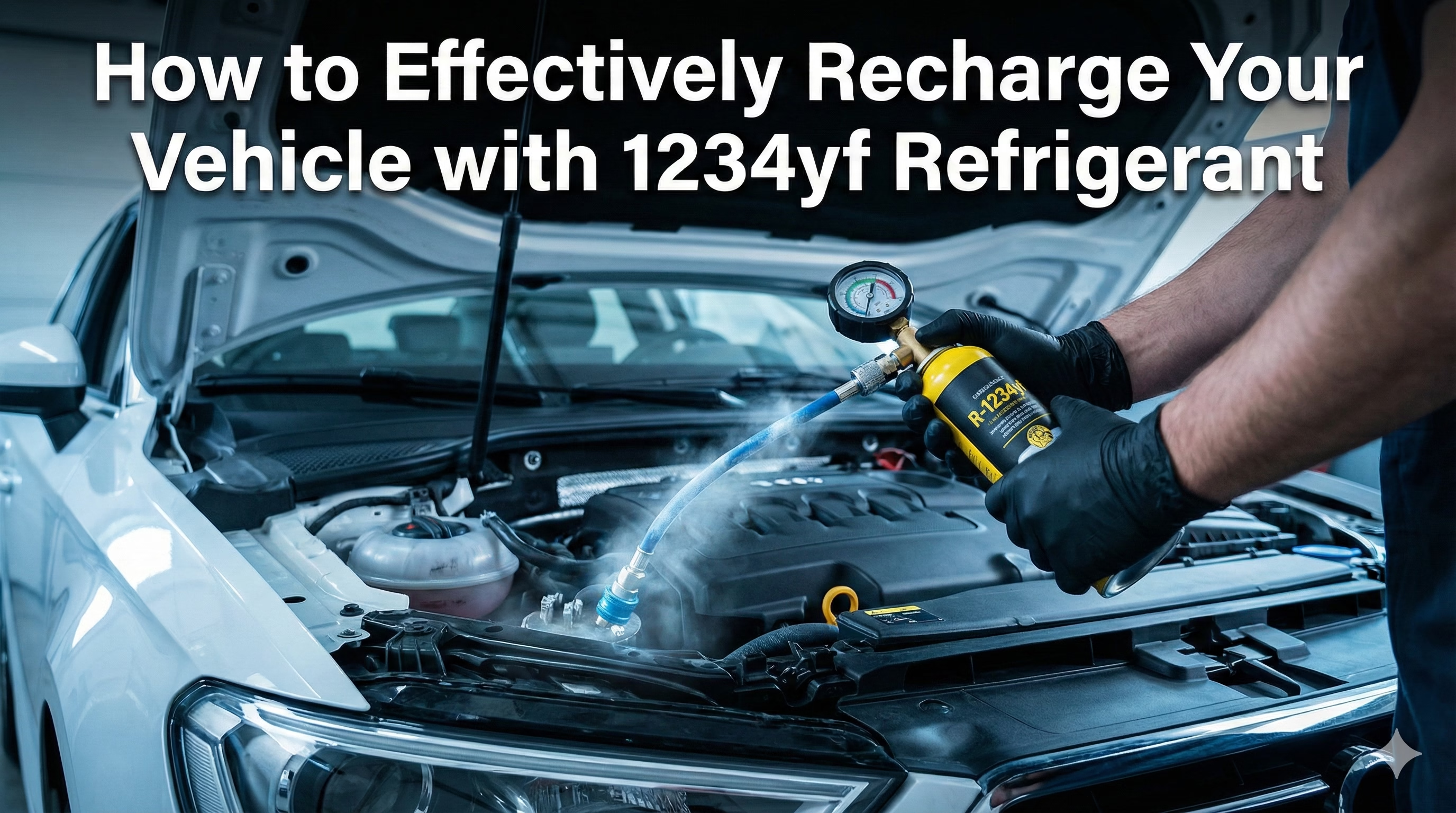
Hey there! If your car’s A/C is blowing warm air lately and you’ve confirmed it’s low on refrigerant, you’ve probably discovered that your newer vehicle (2013 and up, especially 2020+) uses R-1234yf instead of the old R-134a. It’s the “eco-friendly” stuff, and yes, it’s stupid expensive and a little pickier to work with, but recharging it yourself is still totally doable if you’re careful.
Here’s my real-world, no-BS guide to doing it right without grenading your A/C system or breaking the law.
First: The Reality Check
- 1234yf is mildly flammable. Treat it with respect.
- It runs at higher pressures than 134a.
- Most DIY cans you see at the auto parts store are still 134a. Double-check the label!
- In some states (and all of Canada), you technically need a license to buy 1234yf, but a lot of places still sell the small 8-12 oz cans to anyone. Know your local rules.
What You’ll Actually Need
- 1234yf refrigerant (NOT 134a). Popular DIY options right now:
- AC Pro ACP-100YF (comes with a proper 1234yf gauge)
- Super Tech 1234yf from Walmart
- FrostyCool, Chemours Opteon, etc.
- Safety glasses and gloves (seriously, the oil stings)
- A thermometer (to check vent temperature)
- Optional but nice: a real manifold gauge set made for 1234yf (the quick-connects are different and left-hand threaded on the low side)
Step-by-Step (The Right Way)
- Park in the shade, engine off, hood open for at least 30-60 minutes. You want everything cool.
- Find the low-side port. On 1234yf systems it’s usually larger than the high-side and has a black or gray cap marked “L”. The fittings are completely different from 134a, so you literally can’t mix them up if you have the right can.
- Check your current pressure (with the A/C off). At 70°F ambient, you should see roughly 70-80 psi static pressure if there’s any refrigerant left. If it’s zero, you have a leak that needs fixing first.
- Start the car, A/C on MAX, fan on high, doors open, temp set to coldest. Rev the engine to about 1500-2000 RPM (have a friend hold it or use a brick on the pedal if you’re solo).
- Shake the can like crazy and connect it to the low-side port. The trigger gauges on the good kits (like AC Pro) actually work decently for 1234yf. Watch the gauge.
- Target pressures while running (rough guide at 75-85°F outside):
- Low side: 25-45 psi
- High side: 200-275 psi (you can’t see this with most DIY cans, but if you have a real gauge set, use it)
- Add refrigerant in short bursts, rocking the can side-to-side or upside down depending on what the instructions say. Keep checking center vent temperature with your thermometer. You’re done when you hit 35-45°F at the vents with 80-90°F outside temp. That’s as cold as these systems get.
- Stop before the can is totally empty. Overcharging 1234yf systems is way worse than being a little low. It’ll spike your high-side pressure and can pop hoses or damage the compressor.
- Disconnect quickly (there’s usually a little puff, that’s normal) and cap the port immediately.
Pro Tips That Save Headaches
- If the system is completely empty, you NEED to pull a vacuum and add the exact amount by weight. DIY cans won’t cut it. Take it to a shop.
- Leak-stop additives? Most techs hate them. They can clog the tiny orifices in 1234yf expansion valves. Use dye instead if you want to find leaks later.
- Your average can is only 8-10 oz. Many cars take 16-22 oz total. You might need two cans.
- Vent temp not dropping? Could be a clogged cabin filter, weak compressor, or bad blend door, not just low refrigerant.
When to Just Pay a Shop
- System is bone-dry
- You see oily spots or hear hissing
- Compressor won’t kick on at all
- You’re not 100% sure it’s actually 1234yf (check the under-hood sticker!)